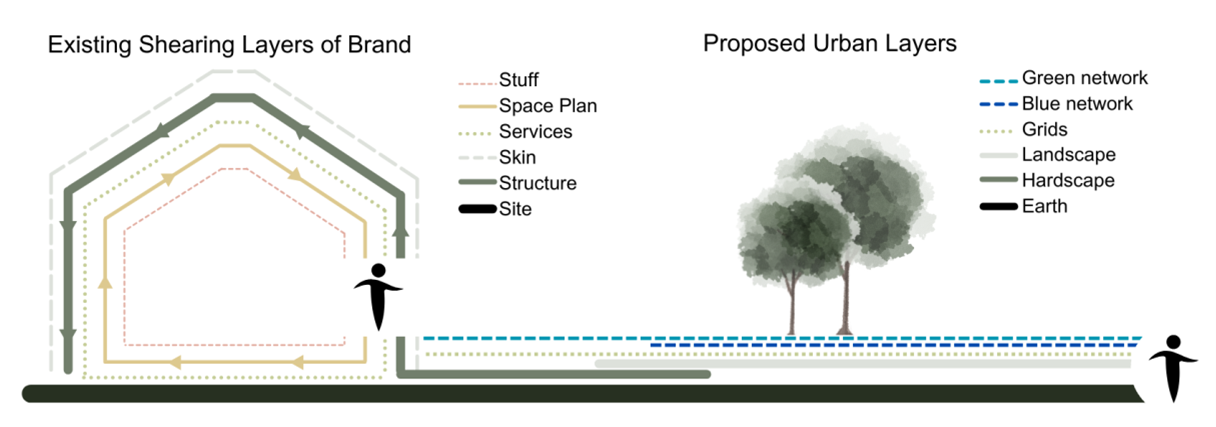
The project aims to accelerate the application of circular solutions in regenerative urban renewal projects at the neighbourhood level, supporting the transition towards a carbon-neutral and circular building stock by 2050 as promoted by the European (EU) Renovation Wave strategy and Circular Economy Action Plan. The project adopts a multilayer approach to frame the availability of environmental resources (e.g. energy, materials, water, etc.) and socio-economic resources (e.g. cultural heritage, local employment, etc.) that characterize a neighbourhood, in turn developing appropriate solutions to increase the recirculation of such resources for urban regeneration. A decision-making instrument will be developed to help municipalities and developers tackle circularity in urban renewal projects, from the analysis of the urban context to the design and implementation of environmental and socio-economic solutions. A multi-stakeholder co-creation approach will be integrated into the decision-making instrument and urban living labs (ULL) will be organized to ensure the participation of key stakeholders. The decision-making instrument will be tested and validated through case studies provided by the consortium focusing on social housing and public spaces. The ULL will take advantage of the diversity of case studies provided by the consortium in terms of geographical locations, urban context, and stakeholder ecosystems.